

Physical Structure
This page owns the physical shell: dimensions, glazing, orientation, airflow constraints, thermal envelope, and solar geometry. Use Equipment Inventory for hardware and relay names, Operations for wetting and lighting policy, and Climate Control for live temperature/VPD behavior.
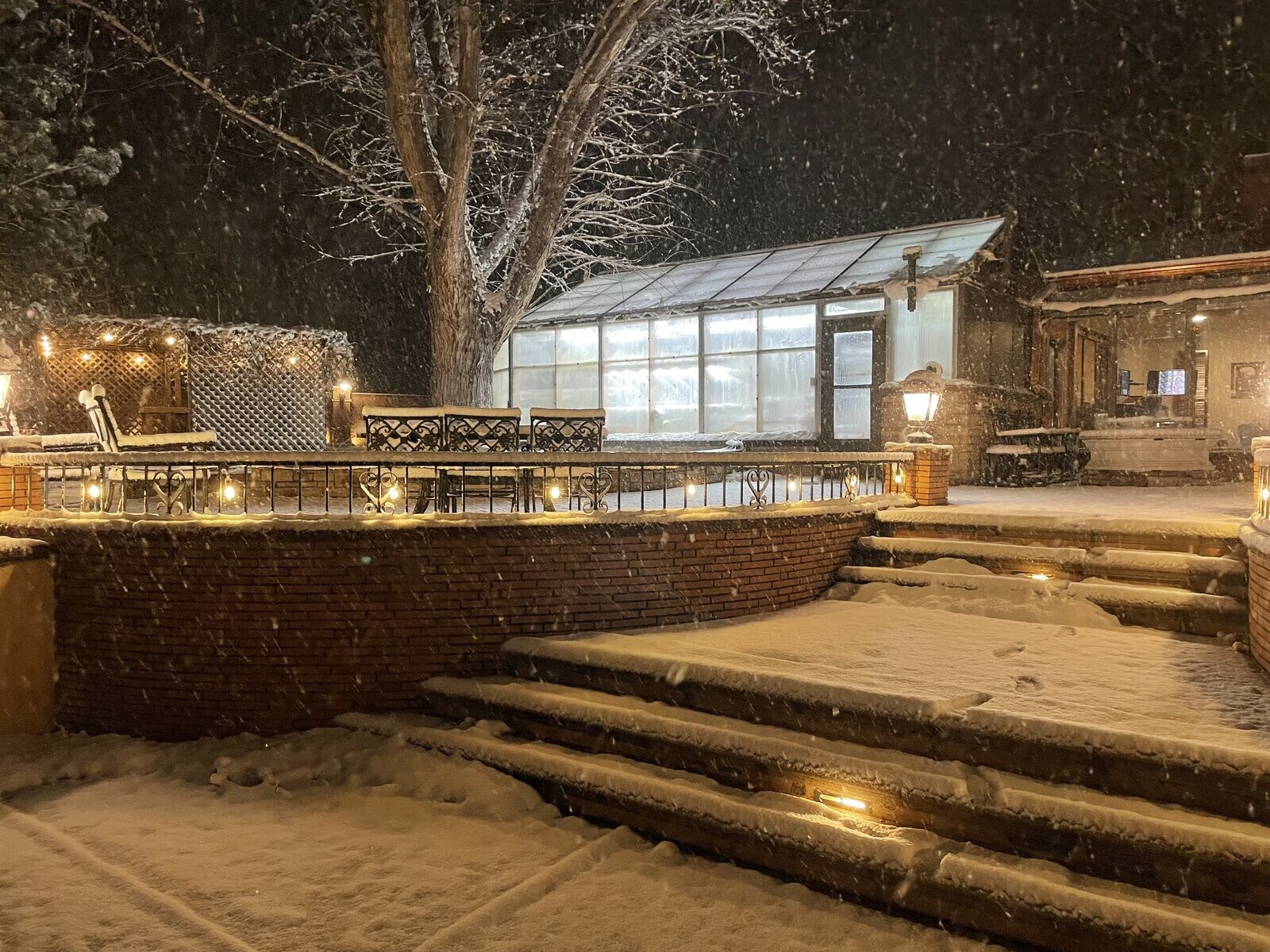
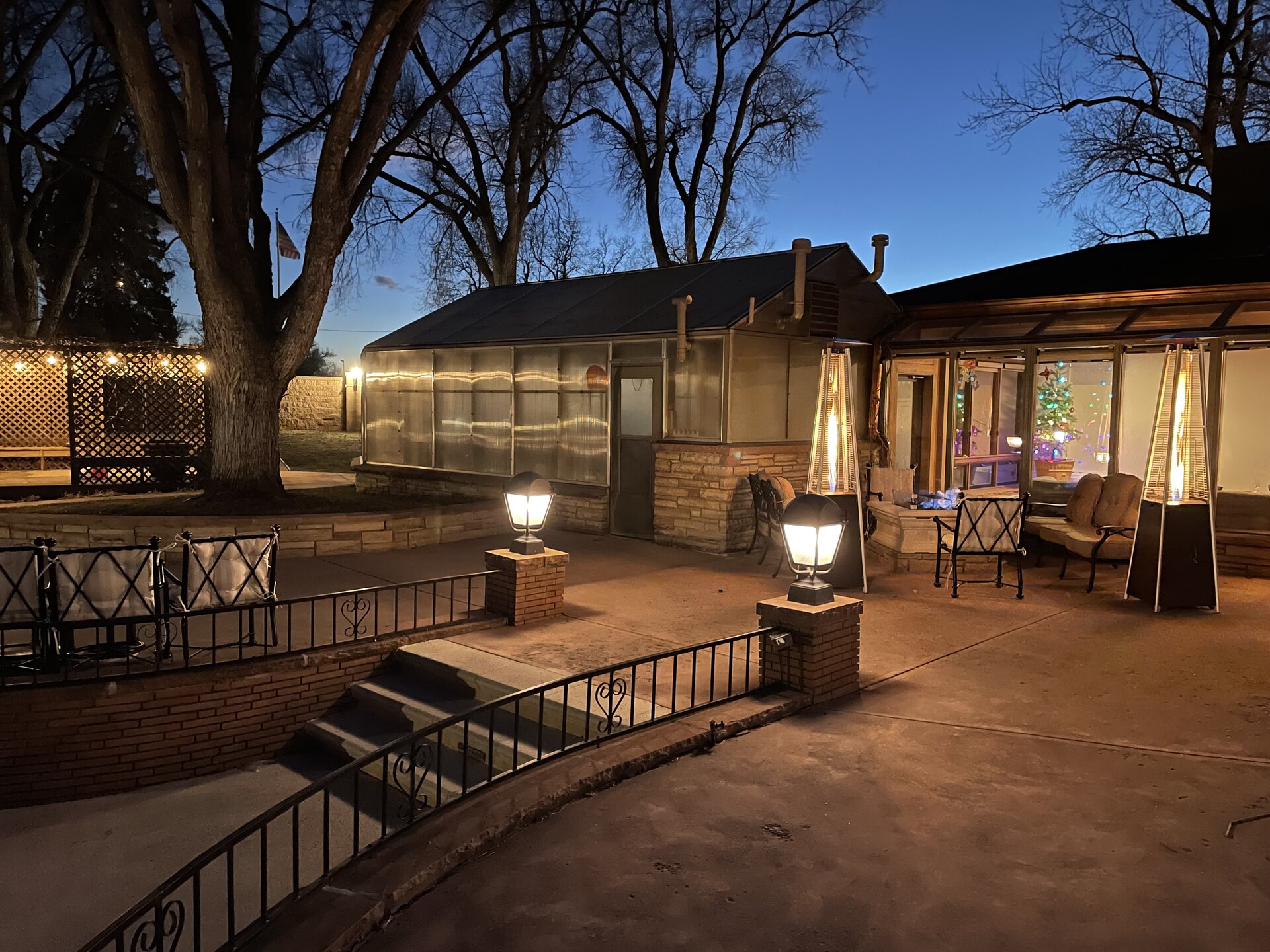
Dimensions And Shape
Interior dimensions below are direct tape measurements from April 2026, generally precise to +/- 0.5”. Orientation and elevation are supported by map/satellite measurements and are treated as canonical constants for solar-angle reasoning until a future survey replaces them.
Rectangular body with a three-face convex south end.
Constant east-west width across the full structure.
269" rectangular section plus a 70" deep south convex section.
Interior usable floor area for crop layout and equipment planning.
Interior air volume, including the tall peaked roof.
Floor to truss line before the roof rises to the ridge.
Floor to ridge beam top at the highest point.
Longmont elevation, important for air density and VPD behavior.
Long-axis orientation for solar-angle reasoning.
Floor Plan
Shared with the house. Interior door, utility spine, service shelf, sink, intake vent, and control hardware. This wall is thermal buffer and infrastructure, not growing surface.
Longest uninterrupted growing surface, shelf bays, overhead light coverage, and late-day solar exposure.
Patio door, propagation area, workbench, and hydroponic rack. The patio door becomes the dominant summer intake.
Three angled faces with the highest solar load, exhaust, south wetting hardware, and floor pots.
Measurement Model
This page keeps unlike measurements separate:
Floor dimensions, wall lengths, air volume, shelf placement constraints, and growing-area assumptions.
Orientation, footprint context, solar-angle reasoning, and future shade analysis.
Equipment models, relay names, sensor inventories, and runtime panels live on Equipment Inventory.
Current canonical constants: interior usable floor area 367 sq ft, interior air volume about 3,614 cu ft, long-axis heading 156.49 degrees, and elevation about 5,090 ft.
Shell And Glazing
The greenhouse is an elongated hexagon: a long rectangular body with a shallow convex south bump. The taper adds only about 61 sq ft, but it changes solar load, exhaust geometry, and south-zone heat stress.
All primary greenhouse glazing surfaces are Gallina PoliCarb 2P: 6mm twin-wall opal polycarbonate installed in December 2023. The opal finish diffuses incoming light, so plants receive softened light rather than a clean direct beam.
The north wall below the gable is shared with the house and is not glazed. Wall height above the 25.5” pony wall is about 70.5”. The concrete slab and house connection create useful overnight buffering, but the polycarbonate envelope still loses heat quickly on cold nights.
Airflow And Thermal Shape
The clean conceptual airflow story is north intake to south exhaust. The real summer path is messier. Once the patio door is open or screened, the dominant intake becomes the east/northeast side, creating a diagonal wash toward the south fans. That helps explain why the west wall can still run hot during late-day sun.
The peaked roof creates a generous air volume for the footprint, but the tall truss zone also collects equipment, grow lights, and warm air. The center zone behaves as a pass-through and humidity pivot, not a fully separate climate room.
Walls above pony wall plus roof; estimate remains close enough for public solar-load reasoning.
Polycarbonate U-value estimate times roughly 800 sq ft of envelope.
Approximate structural load under strong sun; exact value depends on sun angle, shade, season, and glazing assumptions.
Nameplate fan math, not a guarantee of uniform mixing.
Ventilation cannot cool below ambient, and dry intake air can worsen VPD even when temperature improves.
Roof and WSW shade would reduce the load before software has to fight it.
The defining tension is the high glazing-to-floor ratio. The structure admits a large solar heat load relative to the growing area. That is why the Climate Control page treats heat, VPD, solar pressure, fog, and ventilation as one coupled problem rather than separate dashboard stories.
Light Transmission
The hexagonal shape creates a daily signature: transmission changes with sun angle, west/south exposure, polycarbonate diffusion, and the east-side tree.
Left: sensor DLI compared with the estimated actual plant-facing DLI. Right: solar position, which explains why the same glazing and tree shade produce different light behavior through the day. Forecast-vs-actual solar radiation and grow-light policy live on Greenhouse Lighting.
Where To Go Next
- Equipment Inventory for hardware, relay names, sensor inventory, and runtime panels.
- Zones for zone-by-zone climate and planting evidence.
- Climate Control for live temperature, VPD, solar pressure, and safe-band proof.
- Greenhouse Lighting for DLI, light transmission, grow-light decisions, and forecast context.